We Don’t Have a Food Waste Problem, We Have a Value Problem
There is a quiet contradiction at the heart of Africa’s food system. In many homes, especially outside the formal grid of supermarkets and refrigeration, food is treated with care that borders on instinct. Meals are stretched, repurposed, shared. What remains is rarely thrown away—it is reimagined.
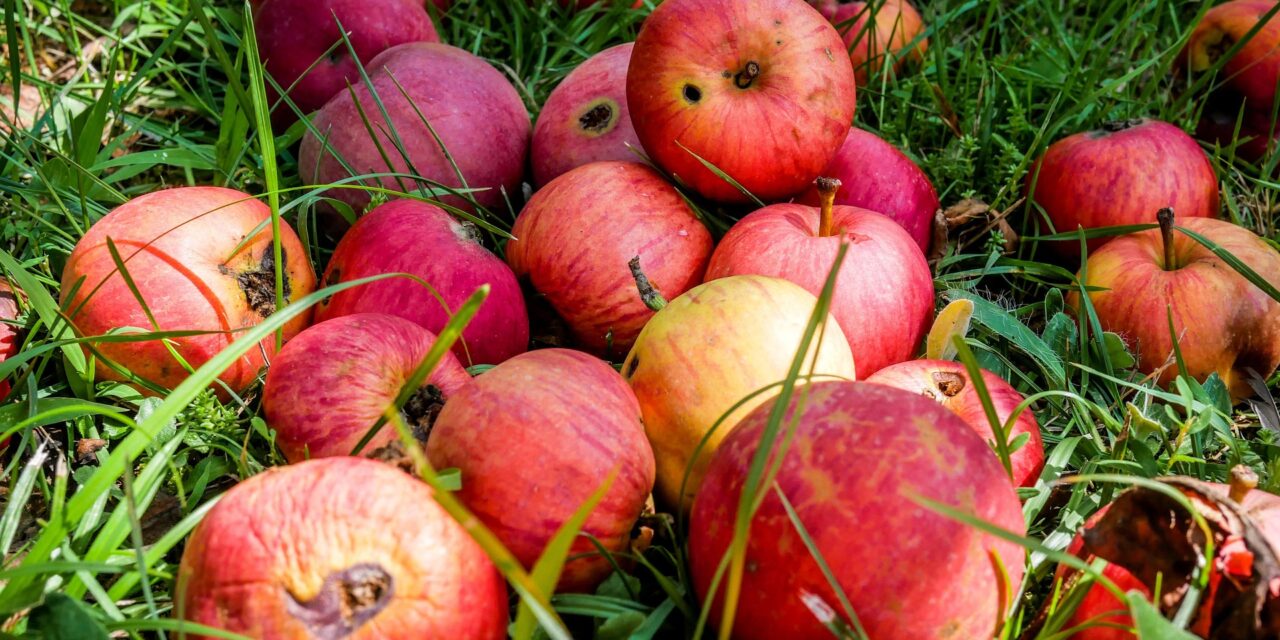
And yet, across the continent, vast amounts of food never make it to the plate at all. Globally, about a third of all food produced—roughly 1.3 billion tonnes annually—is lost or wasted, according to the Food and Agriculture Organization (FAO). In sub-Saharan Africa, estimates suggest losses can reach up to 40% of food produced, much of it disappearing before it ever reaches consumers, as detailed in FAO’s Southern Africa food loss initiatives.
The Waste of Interruption
This is not the waste of excess. It is the waste of interruption. Food is grown. Then it is lost—along roads, in storage, in transit, in systems that were never fully built to carry it forward. The question, then, is not simply why food is wasted. It is why value is. Because in many African contexts, the logic of preservation already exists. It assumes that what you have must be used well.
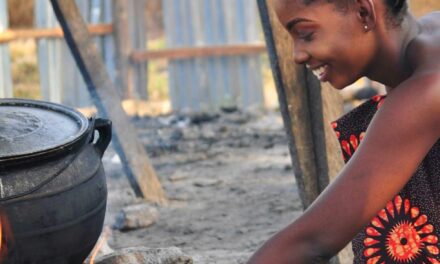
So what happens between the field and the fire? The answer often leads back to women. Across Africa, women make up a significant share of smallholder farmers—up to 50% in some regions, per FAO data. They are responsible for planting, harvesting, sorting, and often selling food. Yet they remain, structurally, on the margins of the systems that determine whether that food survives beyond harvest.
Limited access to storage means crops spoil. Limited access to transport means produce never reaches markets in time. Limited access to financing means farmers cannot invest in even the simplest preservation tools. According to the FAO, weak post-harvest infrastructure—particularly inadequate storage and cold chains—is one of the main reasons food spoils before it can be sold or consumed.
Women on the Margins
These are not small inefficiencies. They are structural gaps. Organisations like the Alliance for a Green Revolution in Africa (AGRA) are increasingly positioning these gaps as central to the future of food on the continent. In a recent LinkedIn post, Evaline Obiero, a Gender, Youth and Inclusion Specialist at AGRA, framed the issue with unusual clarity: “Did you know that globally, over 30% of food produced never reaches the table?” She goes further, linking that loss directly to exclusion: “This is largely because women remain locked out of technologies and resources that are critical to their roles from production through to post-harvest handling.”
It is a striking claim—and one that raises a more uncomfortable question. If women already sit at the centre of food production, why are they still treated as peripheral when it comes to investment? The consequences are visible. Research from FAO and partners estimates post-harvest grain losses in sub-Saharan Africa amount to around $3-5 billion annually—food that could otherwise feed tens of millions of people.
This is not just a food issue. It is an economic one. And increasingly, a climate one. Food that is produced but never eaten still consumes land, water, energy, and labour. It still carries a carbon footprint. In fact, food loss and waste contribute up to 8-10% of global greenhouse gas emissions, per the UN Environment Programme.
Reframing the Real Problem
And yet, solutions are often framed as if the problem begins with production. Grow more. Scale more. Intensify more. But what if the issue is not how much Africa produces—but how much of that production is allowed to matter? This is where the conversation begins to shift. AGRA’s approach, and that of similar organisations, focuses less on abstract goals and more on practical interventions: improved storage technologies, access to better seeds, small-scale processing tools, and stronger links between farmers and markets.
These interventions are not glamorous. They do not photograph well. But they determine whether food survives beyond harvest. Obiero captures the broader impact succinctly: “Supporting women and youth in agri-food systems means less food lost, more food on the table, more employment and incomes and stronger economies for Africa.”
There is, however, a deeper layer to this story—one that is often overlooked. Africa does not need to be taught the value of food. It needs systems that respect the value it already understands. Historically, food systems across the continent were designed around use, not surplus. Preservation was built into practice. Distribution was local. Waste existed, but it was contained within a logic that prioritised continuity.
What has changed is not the mindset—but the structure around it. Supply chains have lengthened. Markets have become more fragmented. Infrastructure has not kept pace. And the distance between production and consumption has widened—geographically, economically, and socially. So the breakdown is not cultural. It is systemic.
Because solving food loss in Africa will not come from importing entirely new ways of thinking. It will come from recognising what already works—and building systems around it that allow food to move, to last, and ultimately, to reach the people it was meant for. Until then, the continent will continue to produce enough. But not benefit enough. And that is not a failure of food. It is a failure of value.