
There was a time when beauty did not demand a schedule. It existed within the rhythm of the day rather than outside it, folded into bathing, into communal spaces, into practices that were as much about maintenance as they were about appearance. In many African contexts, beauty was never entirely separate from living; it moved with the availability of water, the pace of work, and the materials at hand.
That relationship is changing, and not always in ways that are immediately visible.
In contemporary urban life, beauty has become increasingly structured. It asks for time in the morning and again at night. It asks for repetition, for consistency, for adherence to steps that promise results if followed closely enough. Cleansing, toning, treating, masking—these are no longer occasional acts but embedded routines. The language of beauty reinforces this: “regimens,” “systems,” “programmes.” What was once fluid is now procedural.
This shift might appear purely cultural, but it carries environmental implications that are rarely discussed, particularly in regions where water and infrastructure are unevenly distributed.
Water as an invisible ingredient
Water is rarely framed as a central component of beauty, yet it underpins nearly every aspect of it. It is used in the formulation of products, in their application, and in their removal. It flows through the entire lifecycle of beauty, from manufacturing processes to daily routines, and yet it remains largely invisible in how products are marketed and understood.
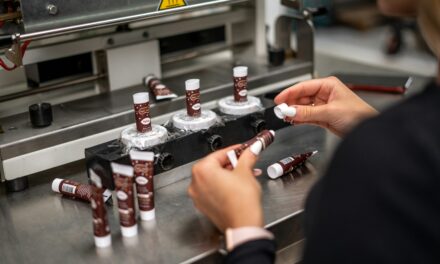
Globally, the beauty industry is deeply water-dependent. Water is often the primary ingredient in formulations, sometimes making up more than 70 percent of a product. Beyond this, significant volumes are used in industrial production processes, including heating, cooling, and cleaning (https://www.waterfootprint.org/resources/Report48-WaterFootprintConsumerProducts.pdf). These are not small quantities, and they are rarely accounted for in consumer-facing narratives.
Within African contexts, the implications of this dependency are more immediate. Access to water is not uniform, and in many regions, it is subject to infrastructural limitations, climate variability, and competing demands. South Africa, for example, is classified as a water-scarce country, with per capita availability well below the global average (https://www.dws.gov.za/iwqs/rhp/state_of_rivers/southafrica.aspx). In such environments, the idea of water as an abundant, neutral resource does not hold.
Yet beauty routines often assume exactly that.
The expectation of frequent washing, rinsing, and layering of products aligns with environments where water is consistently accessible. When these expectations are imported into contexts where access is constrained, they create subtle but significant tensions. The question is not whether individuals should adapt their routines, but whether the routines themselves have been designed with these realities in mind.
The reshaping of time
Alongside water, time is another resource that beauty quietly reorganises. Modern routines are not only about what is used, but about when and how often. They introduce a sense of discipline that can feel productive, even virtuous. Consistency is framed as commitment, and deviation as neglect.
In fast-paced urban environments, this structure can provide a sense of control. However, it also reflects a broader shift in how time is valued and allocated. Beauty becomes something that must be fitted in, optimised, and maintained, rather than something that occurs more organically.
This is not entirely new, but its intensity has increased. The influence of global beauty standards, amplified through digital platforms, has created a constant flow of information about what should be done and how often. Routines are no longer private; they are performed, shared, and replicated. What begins as personal care becomes a form of participation in a larger system of expectations.
In African cities, where daily life already involves navigating infrastructural inconsistencies, economic pressures, and social demands, this additional layer of structure is not insignificant. It shapes how time is experienced and prioritised, often without being explicitly acknowledged.
When tradition meets standardisation
Traditional beauty practices in many African communities tend to operate differently. They are less rigid, less product-dependent, and more responsive to context. Ingredients are used based on availability, need, and seasonality rather than fixed schedules. The process is often slower, but also more adaptable.
Importantly, these practices do not separate beauty from other aspects of life. They are integrated into broader routines—bathing, social interaction, rest. The boundaries are less defined, and the expectations less prescriptive.
The increasing dominance of standardised routines introduces a different logic. It prioritises uniformity over variation, consistency over responsiveness. While this can bring benefits in terms of predictability and measurable results, it can also displace practices that are more closely aligned with local conditions.
This displacement is not always deliberate. It often occurs gradually, as new routines are adopted and older ones become less visible. Over time, what was once common knowledge can begin to feel outdated, even when it remains relevant.
The environmental question beneath the surface
Framing beauty as an environmental issue typically leads to discussions about packaging, ingredients, or waste. These are important, but they do not capture the full picture. The routines themselves—the frequency of use, the reliance on water, the expectation of constant maintenance—also shape environmental impact.
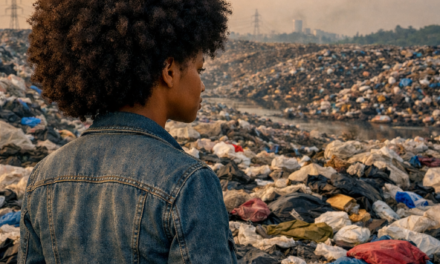
When beauty becomes more intensive, it increases demand not only for products but for the resources required to support their use. More frequent washing leads to higher water consumption. More products lead to more manufacturing, more transportation, and more waste. These effects accumulate, even if each individual action seems minor.
In water-scarce environments, this accumulation carries particular weight. It raises questions about how resources are allocated and what practices are sustainable in the long term. These are not questions that can be answered at the level of individual choice alone. They are embedded in broader systems of production, marketing, and cultural expectation.
Rethinking beauty beyond the visible
If there is an opportunity within this moment, it lies in re-examining what beauty requires. Not in a reductive sense of doing less for the sake of it, but in a more considered approach to what is necessary and what is habitual.
This could involve rethinking the centrality of water in both product design and daily routines, exploring formulations that require less rinsing or fewer steps. It could also mean revisiting traditional practices not as relics, but as adaptive systems that have evolved in response to specific environmental conditions.
More broadly, it invites a shift in perspective. To see beauty not only as a matter of appearance or consumption, but as a set of practices that interact with natural resources, infrastructure, and time itself.
In African contexts, where these elements are already under pressure, such a shift is not merely philosophical. It is practical.
The question is not whether beauty should exist within modern life, but how it does so, and at what cost.