
In many African cities, the language of sustainable design has become increasingly familiar. It appears in architectural briefs, in government strategies, and in the marketing materials of new developments that promise to be greener, smarter, and more efficient. Solar panels are installed, glass facades are optimised, and certifications are pursued as evidence of environmental responsibility. On paper, the trajectory appears promising, even progressive.
Yet there is a persistent dissonance between what is being built and how it is actually lived in.
The problem is not that sustainability is irrelevant. It is that the version being implemented often arrives pre-formed, shaped by contexts where infrastructure is stable, resources are predictable, and systems function as intended. When these models are transplanted into African environments—where electricity supply can be inconsistent, water systems uneven, and urban growth rapid but uncoordinated—they do not always adapt in ways that make sense. Instead, they expose a deeper issue: that sustainability, as it is currently practiced, often prioritises design features over systemic realities.
When buildings perform but systems fail
A building can be energy-efficient in isolation and still exist within a system that is not. This is one of the central contradictions in the current approach to sustainable design across the continent. Developments are often evaluated based on their individual performance—how much energy they save, how efficiently they use water, how well they regulate temperature—yet these metrics assume a broader infrastructure that can support and sustain them.
Across Africa, that assumption is often fragile. The continent faces an infrastructure financing requirement of between $130 billion and $170 billion annually, with a significant shortfall that continues to constrain development (https://mohacafrica.org/infrastructure-gap-in-africa/). This gap is not abstract; it manifests in unreliable electricity, limited transport systems, and strained water networks.
Electricity, for instance, is not evenly accessible. In 2021, less than 20% of rural households across African countries had access to electricity, compared to up to 80% in larger cities (https://www.oecd.org/en/publications/africa-s-development-dynamics-2025_c2b40285-en/full-report/component-8.html). Even within urban areas, supply instability remains a defining feature of daily life. Buildings designed for efficiency still require backup systems—generators, batteries, hybrid solutions—which complicate their environmental footprint rather than simplifying it.
Water systems reveal a similar pattern. Sub-Saharan Africa continues to face deeply uneven access to clean water, driven by inadequate infrastructure, governance challenges, and rapid urbanisation (https://www.mdpi.com/2071-1050/16/4/1592). In many regions, infrastructure is not only limited but also under strain from population growth and climate variability. Under such conditions, the idea of a “self-sufficient” green building becomes less convincing, as it remains dependent on systems that are themselves unstable.
What emerges is a layered reality in which sustainability is not achieved through efficiency alone, but negotiated through inconsistency.
The aesthetic of sustainability
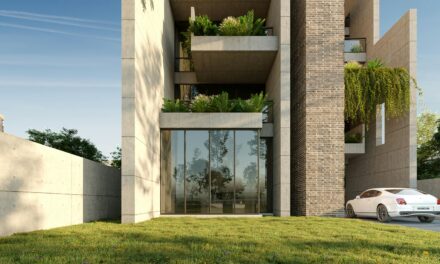
There is also an aesthetic dimension to how sustainability is interpreted. Glass-heavy buildings, minimalist interiors, and high-tech systems have become visual shorthand for environmental responsibility. These forms circulate globally, carrying with them a sense of modernity and aspiration.
However, their suitability within African contexts is not always aligned with environmental logic.
Extensive glass facades, for instance, often increase heat gain in warmer climates, leading to higher cooling demands. In regions where energy systems are already under pressure, this creates a paradox in which buildings designed to appear sustainable require more energy to function effectively. Similarly, reliance on imported materials can introduce additional environmental costs through transportation and production processes.
These choices are not necessarily wrong, but they are rarely neutral. They reflect a design language that is globally recognised, even when it is locally misaligned.
At the same time, many regions across the continent continue to face basic infrastructural limitations. Inadequate access to roads, electricity, and water remains a barrier to implementing even the most well-intentioned architectural projects (https://www.aaa.co.tz/blog/exploring-sustainable-architecture-in-africa). Under these conditions, the visual performance of sustainability can take precedence over its practical application.
Learning from what already exists
Long before sustainability became a formalised concept, many African building traditions were inherently responsive to their environments. Structures were designed to manage heat, maximise airflow, and use materials that were locally available and climatically appropriate.
These approaches were not framed as environmentally conscious—they were simply practical.
Today, however, they are often positioned as secondary to modern, technology-driven solutions. This reflects not a failure of the methods themselves, but a shift in how value is assigned within design discourse. Innovation is frequently associated with newness, even when existing practices offer effective responses to current challenges.
Reintegrating these approaches does not require rejecting contemporary design. It requires expanding the definition of what constitutes innovation, allowing for a more nuanced understanding of sustainability that includes both technological advancement and contextual intelligence.
Infrastructure as the real design problem
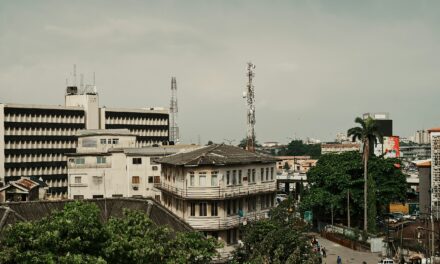
Focusing on buildings alone risks overlooking the larger issue: infrastructure. Roads, transport systems, water networks, and energy grids all shape how cities function and how resources are distributed. Without addressing these systems, even the most efficient buildings operate within constraints that limit their overall impact.
Africa’s rapid urbanisation intensifies this challenge. Cities are expanding faster than infrastructure can be developed, creating uneven access to essential services. Water infrastructure, for example, is often described as inadequate, unreliable, and in need of significant improvement across much of Sub-Saharan Africa (https://www.mdpi.com/2071-1050/16/4/1592). At the same time, demand continues to grow due to population increases and economic development.
Energy systems face similar pressures. The transition to renewable energy presents opportunities, but also introduces new complexities, including the need for skills development, investment, and integrated grid systems. Without these supporting structures, even well-designed green buildings cannot operate as intended.
This is why infrastructure, rather than architecture alone, becomes the central design question. It determines not only how buildings function, but how cities evolve.
Rethinking what progress looks like
The challenge, then, is not simply to build greener structures, but to rethink the frameworks that define sustainability in the first place. Imported standards and certifications often assume conditions that do not fully align with African realities, leading to solutions that are technically sound but contextually limited.
A more effective approach would shift the focus from individual buildings to interconnected systems. Investments in reliable energy, resilient water networks, and accessible transport may have a greater environmental and social impact than isolated architectural interventions.
At the same time, there is space for design approaches that are both locally grounded and globally informed. Combining traditional building methods with modern technologies offers one pathway, as does adapting international standards to better reflect regional conditions.
Such strategies require coordination across sectors, as well as a willingness to move beyond visible markers of sustainability toward less visible, but more foundational, systems.
Beyond the blueprint
What becomes clear is that sustainable design, as it is currently practiced, often addresses what can be controlled within the boundaries of a building, while leaving broader systemic challenges unresolved.
These challenges are not peripheral. They are central.
If sustainability is to move beyond surface-level interventions, it must engage more directly with infrastructure, governance, and lived realities. It must account for inconsistency as much as efficiency, and for adaptation as much as optimisation.
Only then can it begin to reflect not just how buildings should perform, but how cities actually function.