
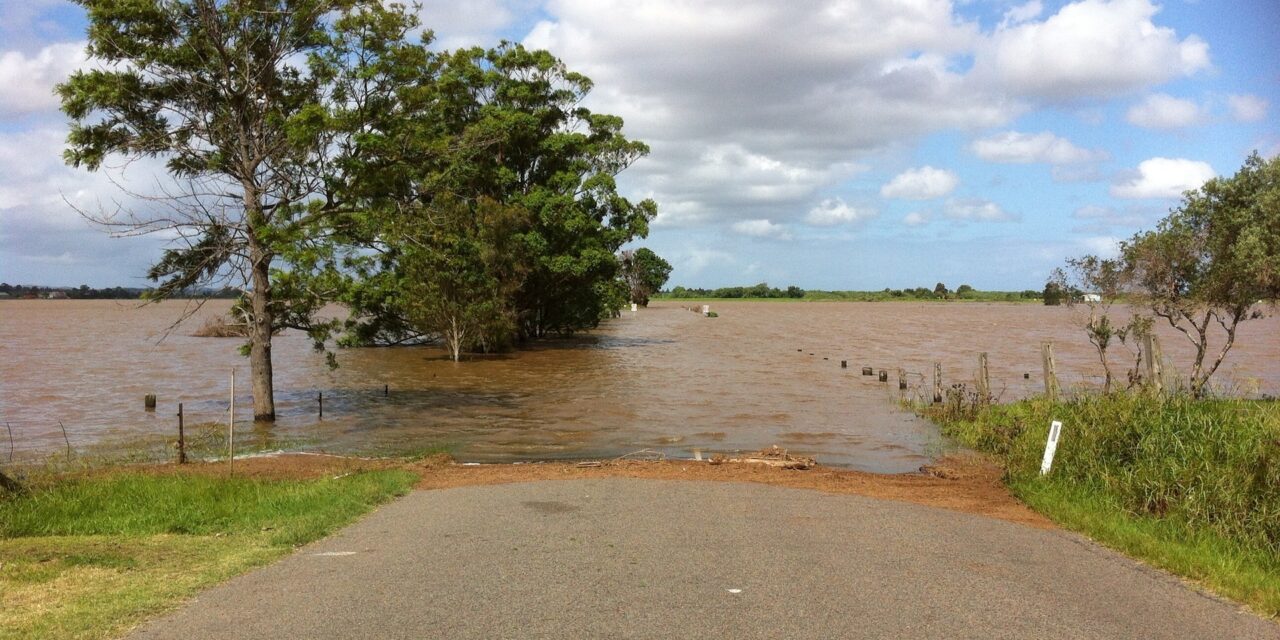
Water does not negotiate with design. It follows gravity, memory, and path—whether planned for or not. When it arrives in excess, it does not simply overwhelm infrastructure; it reveals it. Not just where systems failed, but how they were conceived in the first place.
The 2022 floods in KwaZulu-Natal were widely described as unprecedented. Entire hillsides gave way, rivers swelled beyond their banks, and critical infrastructure collapsed under pressure. Roads folded in on themselves. Bridges disappeared. Settlements—formal and informal—were swept into the same current. What followed in parts of Eastern Cape in 2025 reinforced a pattern rather than an anomaly.
Extreme rainfall events are becoming more intense. That much is widely accepted. But the scale of destruction is never only about rainfall. It is about what exists in its path.
When water remembers what cities forget
Urban expansion in South Africa, as in many parts of the continent, has not always followed ecological logic. Rivers have been redirected, wetlands drained, and floodplains converted into buildable land. Over time, these decisions fade into the background of urban life. Developments rise, roads are paved, and the original behaviour of water is treated as something that has been resolved—engineered away.
But water does not forget.
The Council for Scientific and Industrial Research has repeatedly emphasised that a significant portion of South Africa’s urban expansion has occurred in environmentally sensitive or high-risk areas, often without adequate long-term planning (https://www.csir.co.za/green-book). The issue is not simply that cities are growing, but how and where that growth is taking place.
Floodplains, by definition, are meant to flood. Wetlands are meant to absorb and slow water. When these systems are removed or constrained, the water does not disappear—it accelerates. It finds new paths, often through infrastructure that was never designed to carry it.
In KwaZulu-Natal, post-disaster assessments pointed not only to the intensity of rainfall but to the vulnerability of infrastructure systems—stormwater drainage overwhelmed, informal settlements located in high-risk zones, and transport networks unable to withstand sustained pressure (https://www.worldbank.org/en/country/southafrica/publication/kwazulu-natal-floods-assessment). These are design outcomes, not just natural consequences.
The cost of building against water
There is a particular kind of confidence embedded in modern construction—the belief that engineering can override environmental constraints. Retaining walls hold back slopes. Concrete channels redirect rivers. Stormwater systems are calculated to handle “expected” volumes of rain.
But expectation is the flaw.
Climate variability is making historical averages less reliable as a basis for design. What was once considered a rare event is becoming more frequent. Infrastructure designed for past conditions is increasingly misaligned with present realities.
The United Nations Environment Programme has warned that the gap between current infrastructure design standards and future climate conditions is widening, particularly in rapidly urbanising regions (https://www.unep.org/resources/report/adaptation-gap-report-2023). The implication is not abstract: systems that appear adequate today may already be obsolete.
In practical terms, this means drainage systems that cannot cope, roads that erode under sustained rainfall, and housing developments that sit in zones of compounding risk. It also means repeated cycles of damage and repair—each event prompting reconstruction, often to the same specifications that failed before. This is not resilience. It is repetition.
Private resilience, public exposure
As with energy and water supply, adaptation to climate risk is increasingly becoming privatised. High-end developments incorporate sophisticated drainage systems, retention ponds, permeable surfaces, and landscaped buffers designed to manage excess water. These features are marketed as sustainability, but they function as protection.
In contrast, lower-income and informal settlements often remain exposed. Located on marginal land—steep slopes, flood-prone valleys, or areas with limited drainage infrastructure—they absorb the impact of extreme weather events more directly.
The African Development Bank has highlighted how infrastructure deficits amplify climate vulnerability across African cities, with the most severe impacts concentrated in communities with the least capacity to adapt (https://www.afdb.org/en/cop25/climate-change-africa). The pattern is consistent: resilience accumulates where resources are concentrated.
This creates a dual reality within the same city. In one, water is managed, slowed, absorbed. In the other, it rushes, erodes, destroys.
Designing with water, not against it
If there is a shift emerging, it lies in a gradual reconsideration of how water is treated within design. Rather than being viewed solely as a threat to be controlled, it is increasingly understood as a system to be worked with.
Water-sensitive urban design—once a niche concept—is gaining traction. This includes restoring wetlands, integrating green corridors, using permeable materials, and designing public spaces that can temporarily hold excess water during heavy rainfall. These approaches do not eliminate risk, but they redistribute and reduce it.
The challenge is scale. Implementing such systems within isolated developments is relatively straightforward. Extending them across entire cities—particularly those with existing infrastructure constraints—is far more complex.
There is also a question of time. Retrofitting cities is expensive and slow. Yet the cost of inaction is becoming more visible with each extreme weather event.
What floods ultimately reveal
Floods are often described as disasters, but they are also diagnostics. They show where assumptions fail, where systems are weakest, and where planning has not kept pace with reality.
They reveal that infrastructure is not simply about construction, but about anticipation. About understanding not just how environments behave under normal conditions, but how they respond under stress.
In South Africa, the pattern is becoming clearer. Water is not the anomaly; the systems built around it are. And as climate pressures intensify, the margin for error is narrowing.
The question is no longer whether cities will face these events again. It is whether they will continue to respond in the same way—rebuilding what failed—or begin to rethink the relationship between water and design more fundamentally.
Because water, unlike infrastructure, does not need to adapt. It already knows where it is going.