
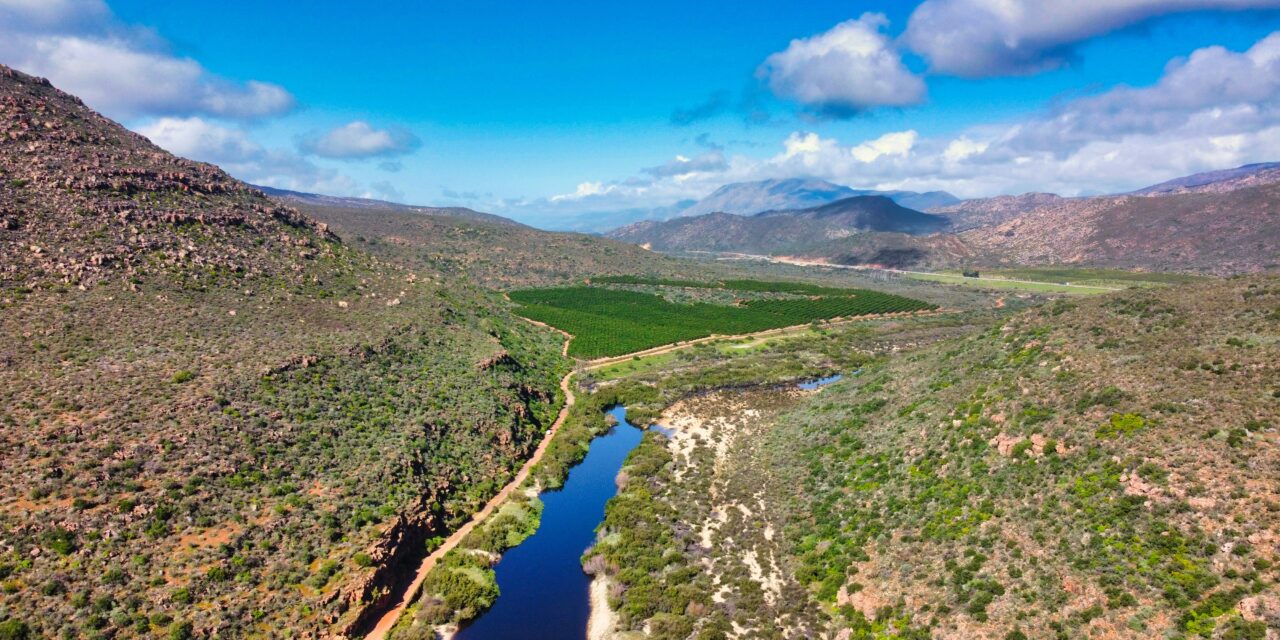
The Western Cape has long been defined by a predictable agricultural rhythm. Winter rainfall feeds wheat and vineyards. Dry summers allow harvesting and export cycles to move with precision. That rhythm is still present, but it is no longer reliable.
According to the Sustainable Agriculture Market Intelligence Report 2026, the province experienced above-average rainfall in 2024, including severe flooding during key harvest periods. The result was widespread infrastructure damage, particularly in the Overberg and Cape Winelands, with estimated agricultural losses reaching R1.4 billion.
(Source: [https://greencape.co.za/wp-content/uploads/2026/01/Sustainable-Agriculture-MIR-2026.pdf]())
A year later, conditions shifted again. The 2025 season brought more balanced rainfall patterns, supporting winter crops and improving yield expectations. This contrast between consecutive seasons reflects a broader shift in climatic behaviour, where stability is becoming less predictable and more conditional.
The report links this directly to growing volatility in seasonal weather patterns, with rainfall now ranging between 300 mm and over 1 000 mm depending on location. That range is widening in its impact, not narrowing. Infrastructure is now part of climate risk.
Flood events in 2024 did more than damage crops. They exposed the fragility of agricultural infrastructure. Irrigation systems, roads, and storage facilities were disrupted at critical points in production cycles.
The report notes that agriculture remains highly exposed to seasonal variability, particularly in regions where high-value crops depend on precise timing. Wine grapes, citrus, and deciduous fruit are especially sensitive to shifts in water availability and harvest timing.
This exposure is now translating into financial pressure. Between 2023 and 2024, the agricultural sector contracted from R25.6 billion to R23.7 billion in gross value added, a decline of 7.4 percent, driven by a combination of environmental shocks and rising input costs.
(Source: [https://greencape.co.za/wp-content/uploads/2026/01/Sustainable-Agriculture-MIR-2026.pdf]())
Farming is becoming a risk management exercise
The Western Cape is still one of Africa’s most productive agricultural regions, but production is increasingly shaped by risk management rather than output optimisation.
Over 1 million hectares were under crop production in 2023. The West Coast alone accounted for 41 percent of this land, while smaller regions like the Central Karoo expanded cultivation by 67 percent between 2017 and 2023 due to irrigation improvements and changing climate conditions.
These shifts suggest a slow reconfiguration of agricultural geography. Farming is expanding into new areas while becoming more selective in others.
The central question emerging from the report is whether stability is still a baseline assumption for agriculture, or whether it has become an exception.