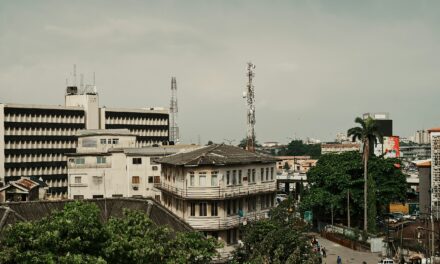

In many African cities, the idea of building anew has become increasingly attractive. Faced with ageing infrastructure, uneven service delivery, and rapid urbanisation, the prospect of starting from scratch offers a kind of clarity that existing cities often cannot. Master-planned developments such as Steyn City in Johannesburg present themselves as precisely this alternative: controlled environments where infrastructure works, systems are integrated, and sustainability is embedded from the outset rather than retrofitted later.
At first glance, this model appears not only desirable but necessary. In contexts where electricity supply is unreliable and water systems are under pressure, developments that can operate with a degree of independence signal progress. Steyn City, for instance, incorporates water recycling systems, energy-efficient design, and extensive green space within a single, coordinated framework (https://www.steyncity.co.za/steyn-city-and-sustainability-the-two-go-hand-in-hand/). These features position it as a forward-looking response to environmental and infrastructural challenges.
Yet the coherence of such developments also raises a more complex question: whether sustainability achieved in isolation can meaningfully translate into broader urban impact.
Self-sufficiency as a design principle
One of the defining characteristics of developments like Steyn City is their emphasis on self-sufficiency. Infrastructure is not assumed; it is built into the development itself. Water systems are partially closed-loop, energy is supplemented through renewable sources, and waste is managed internally to a greater extent than in surrounding urban areas.
This approach reflects a pragmatic response to existing conditions. South Africa’s ongoing energy constraints, for example, have made decentralised solutions increasingly attractive. Load shedding has shifted the design conversation from efficiency alone to reliability, encouraging the integration of backup systems, solar installations, and battery storage within private developments. What might be framed as sustainability in another context is, here, also a form of risk management.
However, self-sufficiency carries its own implications. By internalising infrastructure, these developments reduce their dependence on municipal systems, but they also reduce their engagement with them. The relationship between private and public provision becomes more distant, and the incentives to improve shared infrastructure can weaken over time.
This is not a failure of design, but a reflection of how design responds to systemic conditions. Where public systems are inconsistent, private solutions tend to fill the gap.
The limits of enclave sustainability
The environmental credentials of master-planned estates are often framed in terms of efficiency and conservation. Indigenous landscaping reduces water demand, recycling initiatives divert waste from landfill, and walkable layouts minimise internal transport needs. These are meaningful interventions, particularly when considered at the scale of a single development.
Research on eco-estates in South Africa, however, suggests that these benefits do not necessarily extend beyond their boundaries. Studies have pointed to a disconnect between environmental performance and social impact, noting that such developments can contribute to spatial inequality even as they promote ecological awareness (https://www.su.ac.za/en/faculties/medicine/annual-academic-day/news/eco-estates-failed-contribute-just-sustainabilities).
This tension is not unique to South Africa. Across the continent, new cities and planned developments often prioritise efficiency, security, and service reliability, but do so within frameworks that are accessible primarily to higher-income groups. The result is a form of sustainability that is technically robust but unevenly distributed.
In this context, the question is less about whether these developments are sustainable, and more about the scale at which that sustainability operates. A system that works well internally may still have limited relevance to the wider urban environment if it remains disconnected from it.
The continental pattern of building apart
Steyn City forms part of a broader pattern of master-planned developments emerging across Africa. Projects such as Konza Technopolis in Kenya and Eko Atlantic in Nigeria reflect similar ambitions: to create modern, efficient urban spaces that can accommodate economic growth and technological advancement.
These developments are often positioned as solutions to urban congestion and infrastructural strain. By concentrating investment and planning within defined areas, they aim to bypass some of the challenges associated with upgrading existing cities. Infrastructure can be designed holistically, rather than incrementally, and systems can be implemented with fewer constraints.
Yet this approach also introduces a form of spatial separation. New cities are frequently developed alongside, rather than within, existing urban systems. They operate according to different standards, serve different populations, and are governed by different sets of expectations.
This separation raises important questions about the long-term trajectory of urban development on the continent. If new investment continues to flow into isolated, high-functioning enclaves, what happens to the cities that already exist? More specifically, how does this model contribute to the transformation of broader urban systems, rather than simply creating alternatives to them?
Rethinking sustainability beyond the boundary
The appeal of developments like Steyn City lies in their ability to demonstrate what coordinated design can achieve. They show that water systems can be managed more efficiently, that energy can be decentralised, and that urban environments can be structured around people rather than vehicles. These are not insignificant contributions.
The challenge lies in translating these principles beyond the confines of the development itself.
Sustainability, when framed at the scale of the building or estate, tends to prioritise what can be controlled. Infrastructure, however, operates at a different scale. It is collective, interdependent, and often uneven. Addressing it requires engagement with governance, policy, and public investment, areas that extend beyond the scope of private development.
This suggests that the future of sustainable design in Africa cannot rest solely on new-build solutions. It must also involve the adaptation and improvement of existing urban environments, where the majority of the population continues to live. Informal settlements, ageing infrastructure, and rapidly expanding peri-urban areas are not peripheral concerns; they are central to the sustainability challenge.
Between model and exception
Developments like Steyn City occupy an ambiguous position. On one hand, they function as models of what is technically possible when resources, planning, and coordination align. On the other, they remain exceptions within a broader urban landscape characterised by uneven access to services and infrastructure.
This duality is not easily resolved. It reflects a wider tension within sustainable design between demonstration and scalability. What works within a controlled environment does not always translate directly into more complex, less predictable contexts.
The question, then, is not whether such developments should exist, but how they are understood. If they are treated as end points—complete solutions in themselves—their broader relevance remains limited. If, however, they are seen as testing grounds for ideas that can be adapted and extended, their value becomes more significant.
In this sense, the importance of Steyn City lies less in what it is, and more in what it reveals: that sustainability, when detached from the systems that surround it, risks becoming contained rather than transformative.