
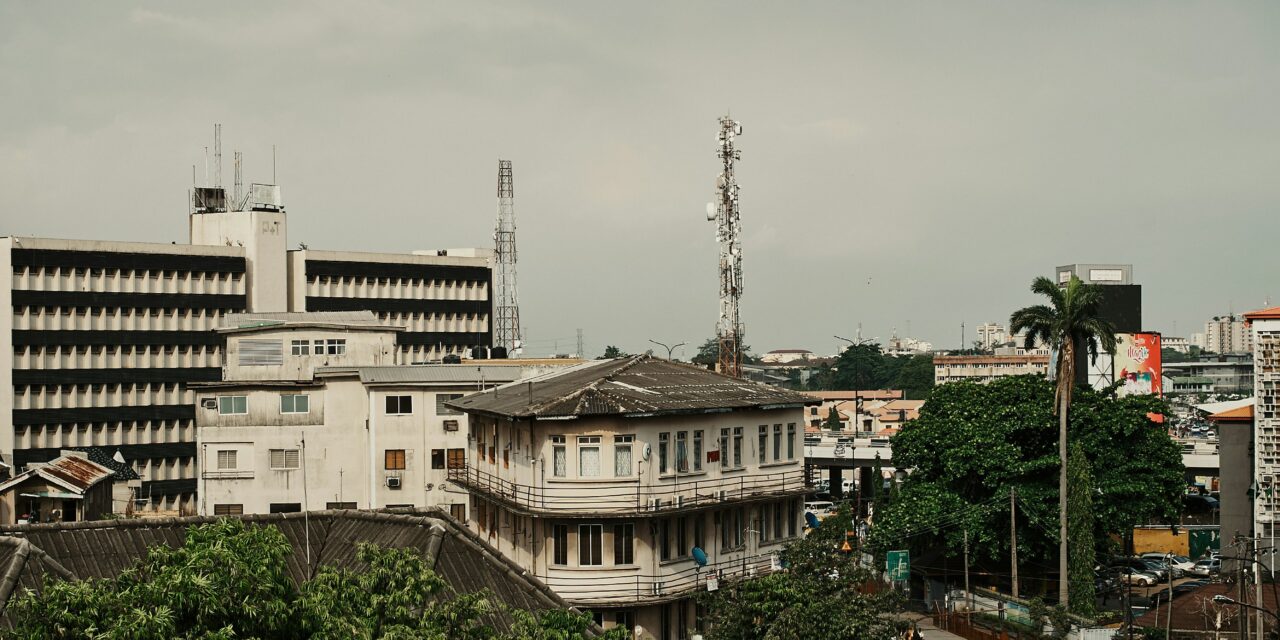
A motorcycle threads through Lagos traffic, skimming potholes and dodging stalls constructed from scavenged cardboard and tarpaulin. Vendors hawk fried plantains under the relentless sun; children weave through the crowd, chasing laughter that echoes over generators’ hum. The city is alive, chaotic, and precarious. Every makeshift stall, every solar-powered phone kiosk, tells the story of survival—but it’s ingenuity born of necessity, not luxury.
Improvisation under pressure
Motorcycles and informal minibuses fill gaps where public transit collapses. Cardboard, tin, and reclaimed wood aren’t charming crafts—they are the raw material of everyday commerce. They work because government investment has failed, not because of creativity alone. Streets flood during the rainy season; electricity cuts happen weekly. Yet people adapt, running small-scale solar kiosks, reusing materials, and cobbling together informal waste collection networks. These “solutions” are fragile, uneven, and often unsafe, but they keep urban life functioning.
Urban planners sometimes dismiss these improvisations as clutter. Yet these micro-infrastructures are low-carbon, socially embedded, and deeply practical. Recognizing them doesn’t romanticize hardship—it acknowledges resilience in the face of systemic neglect. The lesson is critical: sustainable urbanism in Africa must amplify these human-scale interventions while addressing structural inequities.
Blending technology with lived knowledge
Innovation in African cities is not imported; it emerges from hybridizing tools with local understanding. Kigali’s digital waste-mapping system traces informal pickers’ routes, improving collection efficiency while recognizing pre-existing labor networks (https://www.unhabitat.org/newsroom/media-resources/snapshot-kigali-city-walks-the-talk-on-urban-sanitation). In Accra, courtyard revivals create passive cooling and social spaces—simple designs reducing reliance on energy-intensive air conditioning while honoring cultural norms.
Co-design matters. In Cape Town, stormwater parks buffer floods and sequester carbon, but low-income areas experience delayed implementation. Johannesburg experiments with mixed-use precincts, balancing markets, parks, and public spaces. These interventions reveal a tension: “smart city” hype often obscures elite capture, while truly sustainable design emerges when local knowledge guides planning.
Memory as urban capital
African cities are shaped by memory as much as innovation. Festivals, markets, rooftop gardens, and solar kiosks are simultaneously social, cultural, and functional infrastructure.
Rooftop gardens in Kibera cool homes, feed families, and create work for youth. Street orchards offer shade, fruit, and microclimate regulation. Technology amplifies human experience rather than replacing it.
But the picture is uneven. Public spaces are often inaccessible due to security concerns or informal occupation. Flooding, pollution, and electricity cuts remain daily realities. Highlighting innovation without ignoring these failures makes sustainability tangible and accountable. It’s not a story of effortless ingenuity—it’s one of persistence under constraint.
The city as a living system
African cities thrive as ecosystems, not blueprints. Vendors, matatu crews, solar entrepreneurs, and youth gardeners shape streets, courtyards, and alleys. Low-tech solutions—solar lanterns, reclaimed-material stalls, water-harvesting systems—intersect with municipal planning to create functional, resilient, and low-carbon urban life.
Equitable urban design requires critical attention. Where affluent neighborhoods benefit from new infrastructure, informal settlements often remain unserved. Recognizing this disparity doesn’t romanticize poverty—it situates ingenuity within structural challenges, showing what works and what still needs systemic investment.
A forward-looking vision
The next African city will not be defined by glossy towers or sterile grids but by adaptability, cultural memory, and human ingenuity. Streets may flood, power may flicker, but life persists: markets hum, solar panels charge phones, youth run informal libraries, and rooftops grow food. Innovation here is iterative, messy, and deeply human.
Urban sustainability is not an elite badge. It is visible, practical, and shaped by necessity as much as creativity. By amplifying these stories—without glossing over struggle—we see a vision of African cities that is resilient, low-carbon, and people-centered, where everyday interventions matter as much as policy or capital investment.